Monsoon season is here. Don't buy someone else's flood car
Flood season means flood cars on the used market. How to spot a flood-damaged used car in Malaysia: 10 simple checks, paperwork tips and when to walk away.
In short
- Flood cars come onto the used market every monsoon season (November to March), often at prices that look too good to be true.
- Biggest warning signs: a damp or musty smell, silt under the carpets and seats, and rust in places that shouldn't rust.
- A Puspakom pass doesn't prove a car is flood-free. The ownership transfer check isn't designed to find flood damage.
- If in doubt, get an independent inspection or walk away.
- Flood season
- November to March
- Biggest red flags
- Damp smell, silt, odd rust
- Must-do
- Independent inspection
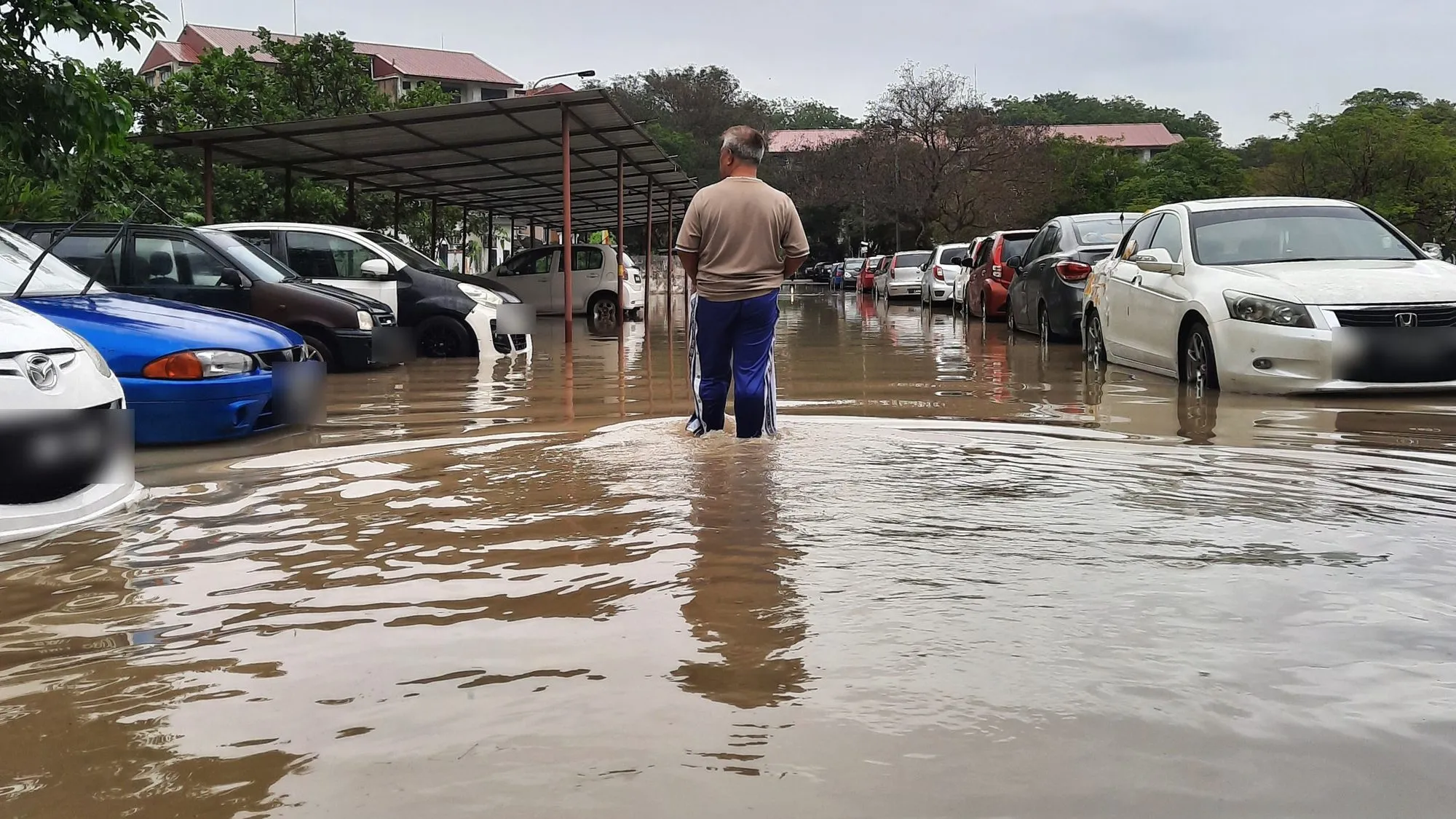
Every year it’s the same story. The northeast monsoon arrives, a few areas go under, and the news shows cars with water up to their windows. This year it started early: on 2 November, dozens of brand-new cars were left sitting in floodwater at a storage yard in Subang.
Here’s the part nobody shows on the news. A few weeks or months later, some of those flooded cars are cleaned up and listed for sale on car listing sites and social media. Shiny paint, fresh carpets, a “very good condition, must view” ad. And a price that looks just a little too good.
Only about 13% of cars in Malaysia have flood cover, according to the General Insurance Association of Malaysia (PIAM). So when a car floods, many owners can’t claim. Some will repair it, and some will try to sell it on to the next person. Let’s make sure that isn’t you.
Why flood-damaged cars end up on the used market
After the December 2021 floods, workshops in Klang alone were expected to receive more than 20,000 flood-damaged cars. Workshops in Shah Alam said a badly flooded car could cost RM20,000 to RM40,000 to put right, mostly because modern cars are full of electronics that can’t be dried out. They have to be replaced.
That’s why flooded cars get sold instead of fixed. And some cars written off by insurers have been rebuilt and put back on the road. In 2024, the Road Transport Department (JPJ) asked the public to report total-loss cars that were still being driven, and road safety groups have said some of these cars were registered and sold to buyers who had no idea.
Don’t count on Puspakom to catch it either. The Puspakom check done when a car changes owner (the B5, now called MV15) mainly confirms the car’s identity: that the chassis and engine numbers match the documents, plus things like lights, bodywork and window tint. None of Puspakom’s inspections is designed to find out whether a car was ever under water. So a Puspakom pass doesn’t mean a car is flood-free.
How to spot a flood-damaged used car: 10 checks
You don’t need to be a mechanic for most of these. Bring a torch.
- Smell it first. Open the doors and breathe in. A musty, damp, mouldy smell, especially in the boot or under the seats, is the number one warning sign.
- Too much air freshener. A strong perfume smell in an older car can be hiding something. Ask why.
- Lift the carpets. Pull back a corner of the floor carpet and the boot lining. Look for damp underlay, a tide line, or a brown stain where water sat.
- Look for silt and grit. Floodwater leaves fine mud behind in places a car wash never reaches: the seat rail tracks, under the spare tyre, under the dashboard, and in the engine bay.
- Rust in strange places. Some rust underneath a car is normal. Rust on the seat rail bolts, pedal brackets, or screws under the dashboard is not, unless that car has sat in water.
- Fogged or stained lights. Check the headlights and taillights for moisture, fog or a faint water line inside the lens.
- Test every electrical feature. Windows, mirrors, central locking, seats, air-con, infotainment, speakers, horn, wipers and every light. Flood problems often show up as small electrical gremlins, and they can appear months after the sale.
- Check the warning lights. With the ignition on, all the dashboard lights should come on and then go off once the engine starts. Lights that stay on, or don’t come on at all, need explaining.
- New parts in an old car. Brand-new carpets, seat covers or an aftermarket head unit in a 10-year-old car? Ask why they were replaced.
- Check the engine oil and air filter. Milky oil, or water marks on the air filter, are bad signs. A workshop can check this properly.
Check the paperwork too
- Service records. Look for long gaps, or lots of parts (carpets, seats, infotainment, sensors) replaced at the same time with no accident to explain it.
- Recond cars. Check the Japanese auction report. Flood damage is usually noted on it (look for the word 冠水, kansui). For more recond checks, see our BMW 530i diary.
There’s no single public database in Malaysia that tells you a car’s flood history. So combine everything above, and don’t rely on any one check.
Hybrids and EVs: be extra careful
Hybrids and EVs have high-voltage batteries and a lot more electronics, and water and high voltage don’t mix. If you’re looking at a used hybrid or EV from a flood-prone area, ask for a battery health report from an authorised service centre before you commit.
When the price is too good to be true
A flood car often sells for well below similar cars. If one is RM5,000 to RM10,000 cheaper than every other listing of the same year and mileage, there’s usually a reason. Ask what it is. And never pay a deposit before you’ve seen the car and had it checked.
Get it inspected, or walk away
If anything on this list makes you uneasy, pay an independent workshop (one with no link to the seller) to inspect it. Ask them to lift the carpets, check the wiring connectors for corrosion, and look underneath. It’s a small cost compared to a flood car’s repair bill.
And remember, there are thousands of used cars for sale. Walking away from a suspicious one costs you nothing.
Bonus: protect your own car this season
- Check your insurance. Flood damage is usually only covered if your policy includes an add-on called special perils. It’s cheap compared to a flood repair.
- Move to higher ground when heavy rain is forecast, and never drive through water you can’t see the bottom of.
Shopping for a family car? Start with my guide to the best used 7-seaters under RM60k. Before you go viewing any used car, grab our used car buying checklist. And if you’re eyeing a car and want a second opinion, ask me about it.
Quick answers
How can I tell if a used car has been in a flood?
Smell the cabin, lift the carpets, and look for silt, water lines and rust in places that shouldn't rust, like seat rails and screws under the dashboard. Then test every electrical feature and get an independent workshop to check it before you pay.
Can a flood-damaged car pass Puspakom?
It can. The ownership transfer check (B5, now MV15) mainly verifies the car's identity, like the chassis and engine numbers, plus things like lights and window tint. No Puspakom inspection is designed to detect past flood damage, so a pass doesn't prove a car is flood-free.
How do I check if a car was declared a total loss in Malaysia?
There's no single public database of flood or total-loss cars in Malaysia. Check the service records for gaps and get an independent inspection. Some paid history-check services exist, but treat them as one clue, not a guarantee.
Is it worth buying a repaired flood car?
Usually not. Modern cars are full of electronics, and water damage can show up months later. Unless the price is far below market, the repair was properly documented and a workshop you trust has checked it, it's better to walk away.
Does car insurance cover flood damage in Malaysia?
Only if your comprehensive policy includes flood cover, usually an add-on called special perils. Most cars in Malaysia don't have it, so check your own policy before the rainy season.